
Why Biophilic Design Matters in Hospitality
Biophilic design is the practice of integrating natural elements into the built environment to enhance human wellbeing, reduce stress, and improve overall guest satisfaction. In hospitality, it is more than an aesthetic choice — it is a strategic design approach that aligns with growing demand for wellness-focused travel. Guests increasingly seek hotels and resorts that offer restorative experiences, and connecting them to nature has proven to boost both emotional connection and brand loyalty.
The Science Behind Biophilic Design
Research shows that humans have an innate need to connect with nature — a concept known as the biophilia hypothesis. Exposure to natural light, greenery, and organic materials has been linked to reduced anxiety, improved sleep quality, and enhanced mood. In hospitality settings, these benefits translate into longer stays, higher guest satisfaction scores, and more repeat visits. Incorporating biophilic principles into spaces supports both guest wellbeing and operational success.
Natural Light as a Core Design Element
Maximising daylight is one of the most impactful ways to bring nature into hospitality spaces. Large windows, skylights, and glass walls not only provide visual access to the outdoors but also regulate circadian rhythms, helping guests feel more energised during the day and relaxed at night. Daylight enhances the perceived size of spaces, reduces reliance on artificial lighting, and creates dynamic interior environments that change with the time of day.
Integrating Greenery and Living Features
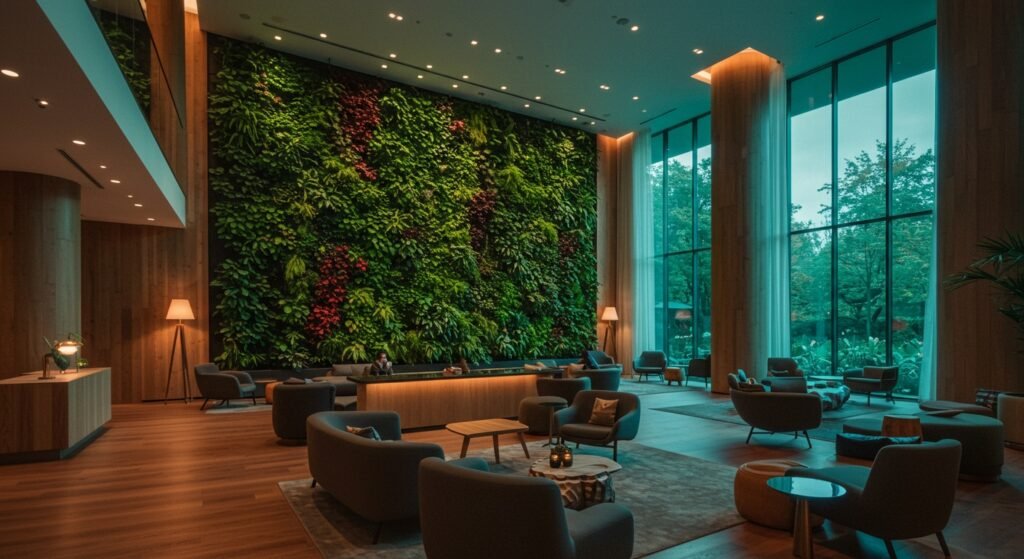
Plants and living walls are more than decorative — they improve air quality, absorb noise, and create a calming atmosphere. In hotel lobbies, vertical gardens can serve as striking focal points, while in guestrooms, potted plants or botanical arrangements can introduce a personal and inviting feel. Outdoor terraces with lush landscaping extend hospitality experiences into nature, encouraging guests to spend more time on-site.
Using Natural Materials and Textures
Material selection plays a major role in biophilic design. Woods, stones, woven fibres, and natural fabrics create tactile and visual connections to nature. For example, oak flooring, linen upholstery, and handwoven rugs can all contribute to a grounded, organic atmosphere. These materials also tend to age gracefully, aligning with principles from The Brand Experience in Hospitality Design: Storytelling Through Space where authenticity and longevity reinforce brand identity.
Water as a Wellness Feature
Water has a universally calming effect. In hospitality spaces, features such as indoor fountains, reflecting pools, or spa hydrotherapy areas can evoke tranquillity. Outdoors, infinity pools, beachfront decks, or riverside terraces provide immersive natural experiences. The sound of moving water acts as a natural acoustic buffer, masking unwanted noise and enhancing relaxation.
Views and Visual Access to Nature
Even when guests cannot be physically outdoors, visual connections to nature can have restorative effects. Framing views of gardens, mountains, or oceanfronts through strategic window placement creates a sense of openness and freedom. In urban hotels, rooftop gardens or internal courtyards can provide much-needed green vistas. These design choices link directly to the spatial psychology concepts outlined in The Psychology of Space: How Interior Design Shapes Guest Experience.
Seasonal and Sensory Variation
Biophilic design is most effective when it engages multiple senses and evolves over time. Seasonal planting, natural scents such as fresh herbs or wood, and material palettes that change subtly throughout the year keep spaces feeling alive. This variety stimulates curiosity and encourages repeat visits as guests return to see the space in different seasons.
Sustainability and Biophilic Principles
Biophilic design naturally aligns with sustainable practices. Locally sourced materials reduce carbon footprints, while green roofs and landscaping help manage stormwater and improve insulation. Energy-efficient lighting and climate control systems can be seamlessly integrated into nature-inspired interiors. Guests are increasingly aware of environmental impact, and sustainable biophilic design strengthens a property’s eco-conscious brand positioning.
Technology and Nature Working Together
Technology can enhance biophilic design without diminishing its authenticity. Automated skylight controls, irrigation systems for living walls, and circadian lighting programmes can help maintain natural features efficiently. In guest rooms, digital interfaces can be programmed to play nature-inspired soundscapes or control lighting to mimic natural daylight patterns, creating an immersive wellness experience.
Conclusion: Designing for Human Connection
Biophilic design in hospitality is about more than bringing the outdoors in — it is about creating environments where guests feel restored, inspired, and connected to something greater than themselves. When combined with strong brand storytelling and a deep understanding of spatial psychology, it becomes a powerful tool for differentiation in a competitive market. By investing in nature-inspired spaces, hospitality brands can create experiences that guests remember, share, and seek out again and again.