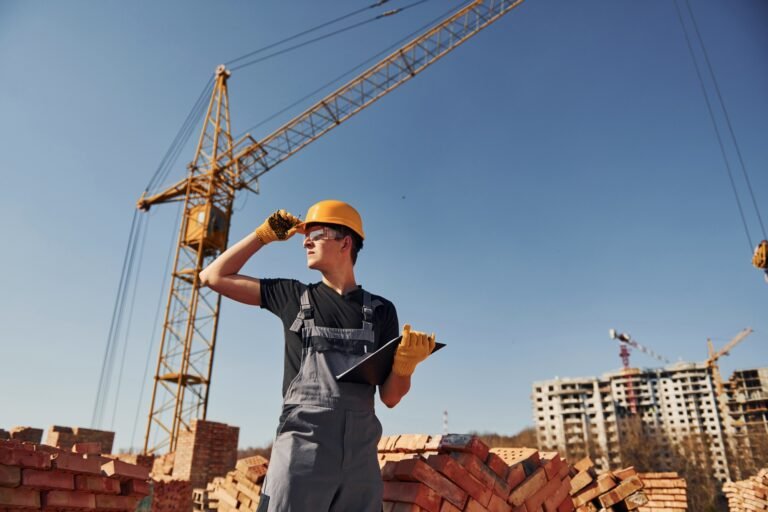

For centuries, bricks and blocks defined the way the world built. They are familiar, dependable, and proven. Yet in today’s construction landscape is defined by labour shortages, material inflation, sustainability targets, and the race to open faster, and therefore the traditional brick-and-block building is increasingly unfit for purpose.
Clients in hospitality, commercial, and high-end residential markets now expect projects to deliver more: shorter build times, higher thermal efficiency, stronger structures, and greener footprints. Meeting those demands with old methods is nearly impossible. As a result, developers and architects are shifting toward modern approaches such as modular construction, 3D printing, and poured Insulated
Concrete Form (ICF) systems.
The Problems with Bricks and Blocks
While still widely used, bricks and blocks suffer from challenges that no longer align with market realities:
- Slow Build Speeds: Bricklaying is labour-intensive and can add years to major projects.
- Labour Dependency: Skilled bricklayers are scarce, pushing up costs and creating delays.
- Variable Quality: Outcomes depend on individual craftsmanship, leading to inconsistencies in alignment, mortar joints, and thermal performance.
- Carbon-Heavy Production: Firing bricks consumes vast amounts of energy and contributes significantly to emissions.
- Weather Risk: Construction halts in wet or freezing conditions, extending timelines and budgets.
For investors and operators, these weaknesses translate into slower openings, higher OpEx, and more volatile project delivery.
The Rise of Modern Alternatives
Modular Construction: Building Smarter, Off-Site
In modular construction, fully finished building sections are manufactured in a controlled environment and assembled on site.
Advantages:
- 50% Faster Delivery: Site and factory work happen simultaneously.
- Quality Assurance: Factory conditions guarantee precision and consistency.
- Minimal Disruption: Reduced noise, dust, and traffic at live sites.
- Sustainability: Less waste, more efficient energy use.
Example: A 120-room UK business hotel completed its superstructure in just 10 weeks using modular units, opening six months earlier than a traditional build and saving over £500,000 in holding costs.
3D-Printed Construction: The Next Frontier
Using robotic printers and custom concrete mixes, 3D printing creates walls and structural elements with unprecedented speed and efficiency.
Advantages:
- Ultra-Fast Output: Walls can be produced in days, not months.
- Design Freedom: Curves and complex shapes cost no more than straight walls.
- Material Efficiency: Exact quantities of concrete are used, minimising waste.
- Eco-Friendly: Many mixes incorporate recycled or localised materials.
Example: Dubai’s first 3D-printed office building was completed in just 17 days, using 60% fewer materials while meeting strict safety standards.
Poured ICF: Strength Meets Energy Performance
Insulated Concrete Formwork (ICF) uses interlocking insulated blocks filled with poured concrete, creating a monolithic structure with permanent insulation.
Advantages:
- Unmatched Strength: Up to nine times stronger than standard brick-and-block.
- Rapid Assembly: Entire wall sections can be poured in a day.
- Thermal Excellence: Insulation reduces heating and cooling costs for decades.
- Fire and Disaster Resistance: Resilient against fire, hurricanes, and seismic events.
Example: A boutique Irish hotel completed its structure in just four weeks using poured ICF, achieving near-passive house energy ratings and reducing operating costs by 35%.
Why Modern Methods Outperform Bricks and Blocks
- Faster Revenue: Hotels, retail, and residential projects open 30–50% sooner, accelerating cash flow.
- Stronger Assets: Modular units and ICF walls outperform brickwork in durability, water resistance, and stress tolerance.
- Sustainability First: Reduced waste, lower carbon emissions, and superior thermal performance align with BREEAM, LEED, and nZEB standards.
- Predictable Costs: Controlled factory processes cut out delays, rework, and inconsistent quality.
Why the Shift is Happening Now
Global headwinds are accelerating the move away from traditional methods:
- Supply Chain Strain makes factory-controlled solutions more efficient.
- Labour Shortages highlight the need to reduce reliance on scarce trades.
- Rising Interest Rates mean every month saved on-site equals major financial advantage.
- Client Expectations have evolved. Speed, sustainability, and lifecycle efficiency are now non-negotiable.
Modern construction isn’t an experiment. From Dubai to Dublin, these methods are delivering at scale. The real question is no longer whether modular, 3D, or ICF can compete with bricks and blocks—it’s whether bricks and blocks can compete with them.
Final Thought
For developers, investors, and hospitality operators, the decision is clear. Embracing modern building methods means opening sooner, generating revenue earlier, and delivering assets that are greener, stronger, and more resilient.
Traditional bricks and blocks may have been built in the past, but modular, 3D printing, and ICF are building the future. The choice isn’t about replacing traditions, its about creating value that lasts.