
In hospitality, every design decision — from the placement of furniture to the tone of lighting — influences how guests feel, behave, and remember their stay. This is the essence of the psychology of space: understanding how the built environment affects human emotions and behaviour.
For hotels, resorts, and restaurants, harnessing spatial psychology is not just an aesthetic exercise. It is a powerful business tool that shapes brand perception, guest satisfaction, and repeat bookings. When interior design is guided by an understanding of how people interact with space, it becomes an invisible yet constant driver of positive guest experiences.
1. Why Spatial Psychology Matters in Hospitality
Guests rarely analyse why they feel comfortable or unsettled in a space — but their behaviour reveals the answer. Subtle design cues guide how long guests linger in a restaurant, whether they feel relaxed in a spa, or how quickly they move through a lobby.
By aligning interior design with human psychological needs, hospitality spaces can:
- Increase guest satisfaction and loyalty
- Encourage longer stays in revenue-generating areas
- Improve social interaction or privacy as needed
- Reinforce the property’s brand identity
The best hospitality spaces feel “effortlessly right” — not by accident, but through careful psychological design.
2. First Impressions and the Arrival Experience
Psychologists call the first few minutes of a guest’s arrival the primacy effect — the idea that first impressions strongly influence overall perception.
In hospitality design, this means the arrival sequence must be intentionally crafted:
- Clear sightlines from the entrance to reception and key amenities reduce anxiety.
- Welcoming focal points, such as a feature wall, art piece, or signature scent, create an immediate sense of place.
- Proportions and scale should feel balanced, neither overwhelming nor underwhelming.
A well-designed entry experience sets the emotional tone for the entire stay.
3. Space Planning and Human Behaviour
The layout of a hospitality venue subtly directs guest behaviour. For example:
- Open, flowing layouts encourage exploration and social interaction.
- Segmented, intimate areas promote privacy and relaxation.
- Strategic bottlenecks (such as a bar area between the lobby and restaurant) can drive guests toward certain revenue opportunities.
Successful space planning requires mapping the guest journey — anticipating where they will go, what they will see, and how they will feel at each stage.
4. The Emotional Impact of Colour
Colour is one of the most powerful tools in spatial psychology. Different hues trigger different emotional responses:
- Warm tones like amber, terracotta, and gold create intimacy and energy.
- Cool tones like soft blues and greens promote calm and relaxation.
- Neutral palettes convey elegance and timelessness, allowing brand accents to shine.
In hospitality, colour must align with the function of each space — energising in public areas, calming in guestrooms, and appetite-stimulating in dining zones.
5. Lighting as an Emotional Regulator
Lighting affects mood, circadian rhythms, and even social behaviour. In hotels and resorts:
- Warm ambient lighting fosters relaxation and intimacy in lounges and restaurants.
- Cooler, brighter lighting improves alertness in conference rooms and gyms.
- Layered lighting — combining ambient, task, and accent sources — offers flexibility for different times of day and guest needs.
Dimming capability is essential, allowing the same space to shift mood from morning brightness to evening intimacy.
6. The Role of Texture and Materiality
Texture provides tactile and visual cues that influence comfort and perceived quality. For example:
- Plush upholstery and soft rugs signal comfort and warmth.
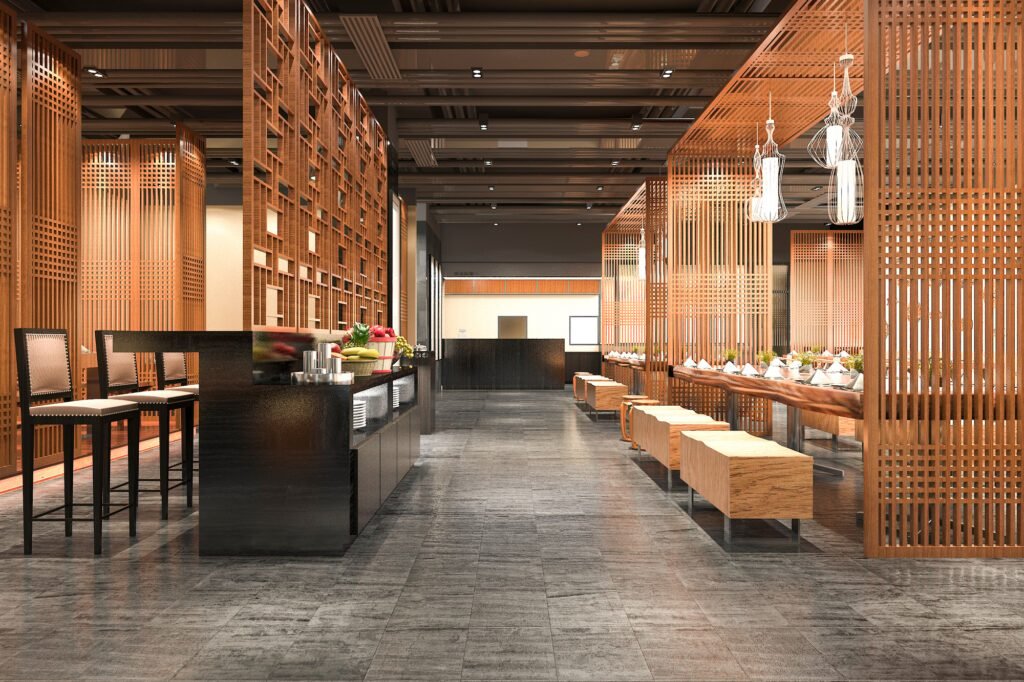
- Smooth stone and polished metals convey luxury and formality.
- Natural, raw finishes suggest authenticity and connection to nature.
A balanced mix of textures creates depth and visual interest, keeping spaces engaging without overstimulation.
7. Privacy vs. Social Connection
One of the most complex challenges in hospitality design is balancing privacy and social interaction. Not every guest wants the same level of engagement.
Design strategies include:
- Creating public zones (bars, lounges, shared tables) to encourage mingling.
- Providing semi-private nooks for small group conversations.
- Offering fully private spaces like secluded cabanas or exclusive dining rooms.
This layered approach allows guests to choose their preferred level of connection.
8. Acoustics and the Soundscape
Sound shapes atmosphere as much as visuals. Poor acoustics can turn an otherwise beautiful space into a stressful environment.
Acoustic design considerations:
- Sound-absorbing materials in restaurants to keep conversation private.
- Background music aligned with the brand identity and desired mood.
- Natural sound masking in outdoor spaces, such as water features, to create calm.
A thoughtfully designed soundscape contributes to comfort and brand consistency.
9. Cultural Sensitivity in Spatial Design
Cultural expectations influence how people perceive space. For example:
- In some cultures, personal space is highly valued; in others, close proximity is the norm.
- Design symbolism (colours, motifs, layouts) may have different meanings across markets.
Hotels that cater to an international audience must balance global brand identity with local cultural nuances to avoid alienating guests.
10. Consistency Across the Guest Journey
The guest experience is holistic — each space influences the perception of the next. A beautifully designed lobby loses impact if guestrooms feel cramped or poorly lit.
Consistency means aligning every touchpoint — visual, sensory, and operational — to create a seamless flow. This not only reinforces brand identity but also reduces the cognitive dissonance that can lead to guest dissatisfaction.
Conclusion
The psychology of space is not abstract theory — it is a practical, measurable factor in hospitality success. By aligning interior design with human behaviour, emotional needs, and cultural context, hotels and resorts can create spaces that guests connect with on a deeper level.
A well-designed space does more than look beautiful — it feels right. And when it feels right, guests stay longer, return more often, and become loyal advocates for the brand.